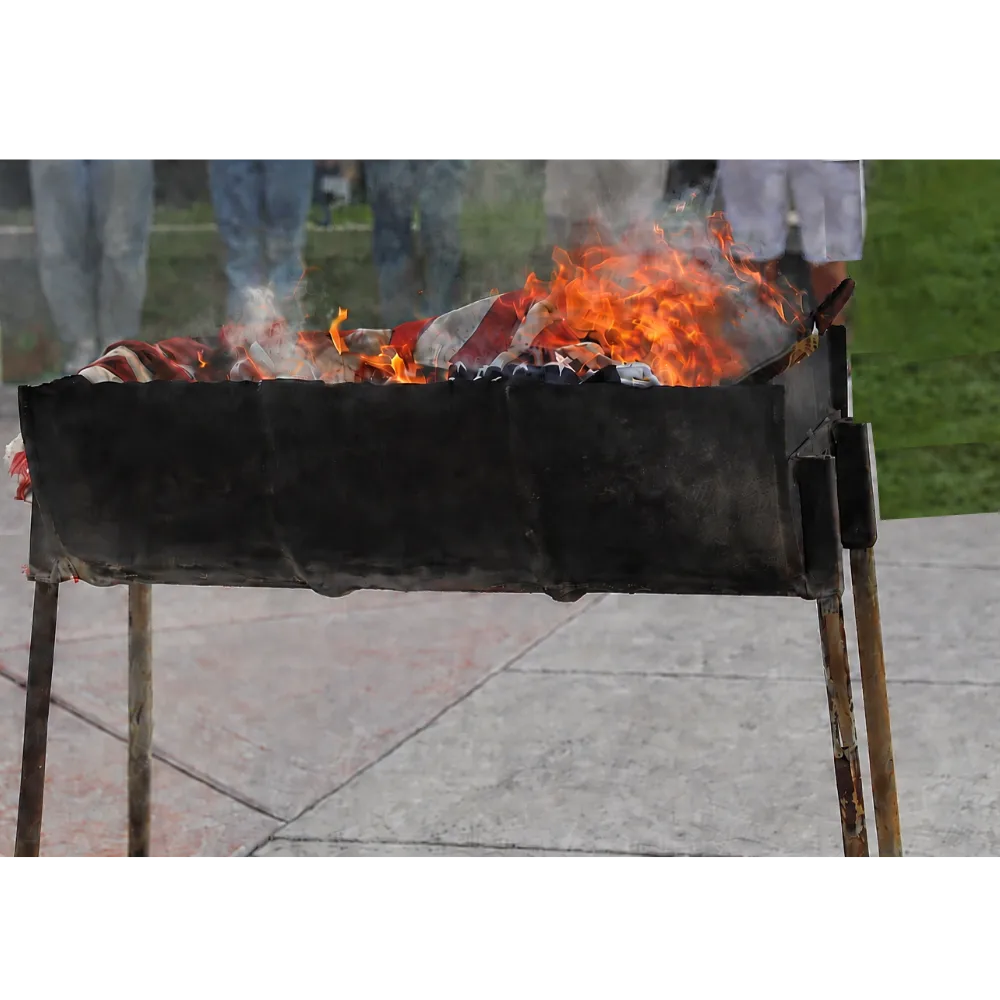
Photo: Utah National Guard / Sgt. Dustin B. Smith
Utah National Guard photo by Sgt. Dustin B. Smith, 128th Mobile Public Affairs Detachment. Student delegates watch a flag retirement ceremony at Freedom Academy 2026, Camp Williams, Utah, July 15, 2026. Source: DVIDS, Photo ID 9816289 (public domain). Use of this image does not imply endorsement by the Utah National Guard, the U.S. Army, or the Department of Defense.
Our Retirement Program
Tattered Flag Foundation hosts flag retirement ceremonies right here in the Oracle area. If you have a flag ready to retire, just get in touch — we'll work out whether it makes more sense for you to drop it off or for us to come pick it up. We retire flags both by burning and by respectful burial, and ceremonies typically happen on weekends and holidays, though other times can usually be arranged if you ask.
We also offer flag replacements on request. This is generally reserved for seniors and disabled citizens who are no longer able to maintain a flag of their own, so if that describes your situation, reach out and let us know.
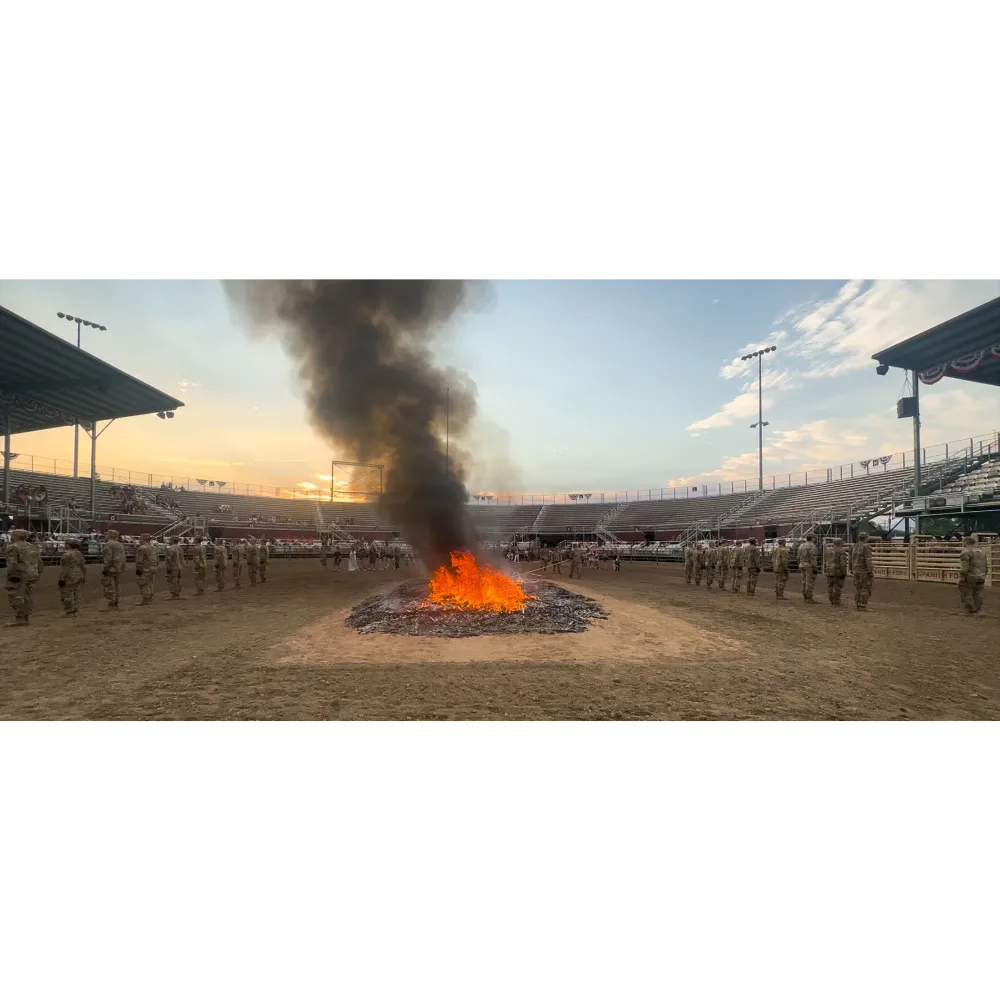
Photo: U.S. Army National Guard / Keith Garner
U.S. Army National Guard photo by Keith Garner. Utah Army National Guard soldiers, American Legion members, Boy Scouts, and community volunteers retire worn American flags at the Fiesta Days Flag Retirement Ceremony, Spanish Fork, Utah, July 13, 2026. Source: DVIDS, Photo ID 9863413 (public domain). Use of this image does not imply endorsement by the U.S. Army, the National Guard, or the Department of Defense.
The Rule
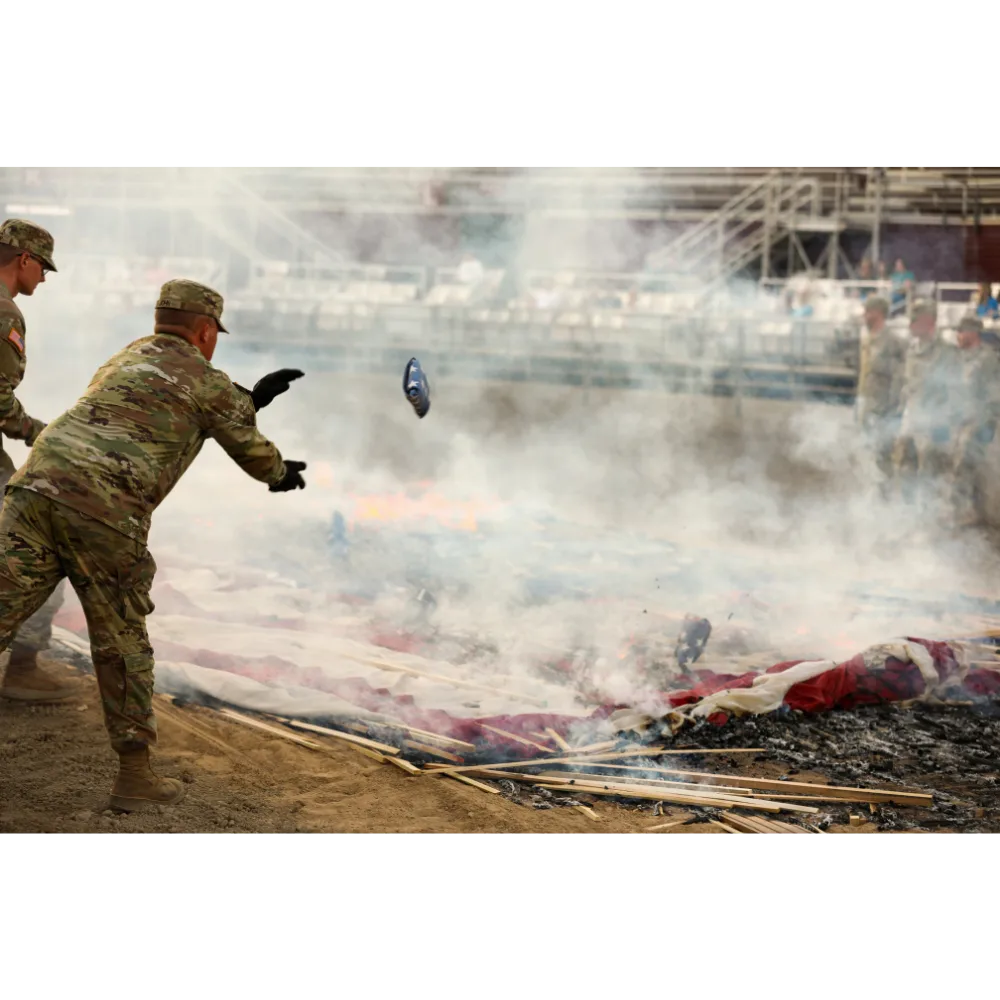
Photo: U.S. Army National Guard / Keith Garner
U.S. Army National Guard photo by Keith Garner. Utah Army National Guard soldiers, American Legion members, Boy Scouts, and community volunteers retire worn American flags at the Fiesta Days Flag Retirement Ceremony, Spanish Fork, Utah, July 2026. Source: DVIDS, Photo ID 9863421 (public domain). Use of this image does not imply endorsement by the U.S. Army, the National Guard, or the Department of Defense.
The Burning Ceremony
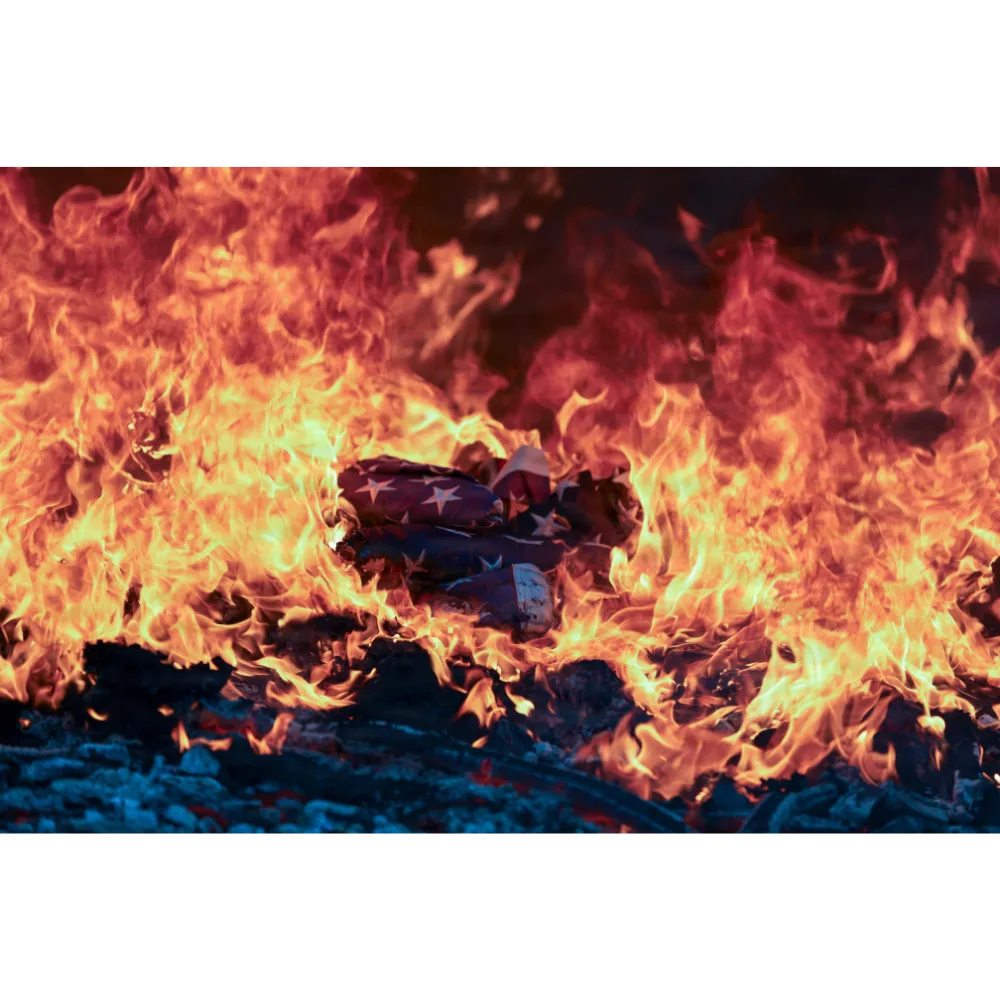
Photo: U.S. Army National Guard / Keith Garner
U.S. Army National Guard photo by Keith Garner. Utah Army National Guard soldiers, American Legion members, Boy Scouts, and community volunteers retire worn American flags at the Fiesta Days Flag Retirement Ceremony, Spanish Fork, Utah, July 2026. Source: DVIDS, Photo ID 9863418 (public domain). Use of this image does not imply endorsement by the U.S. Army, the National Guard, or the Department of Defense.
Synthetic Flags & Burial
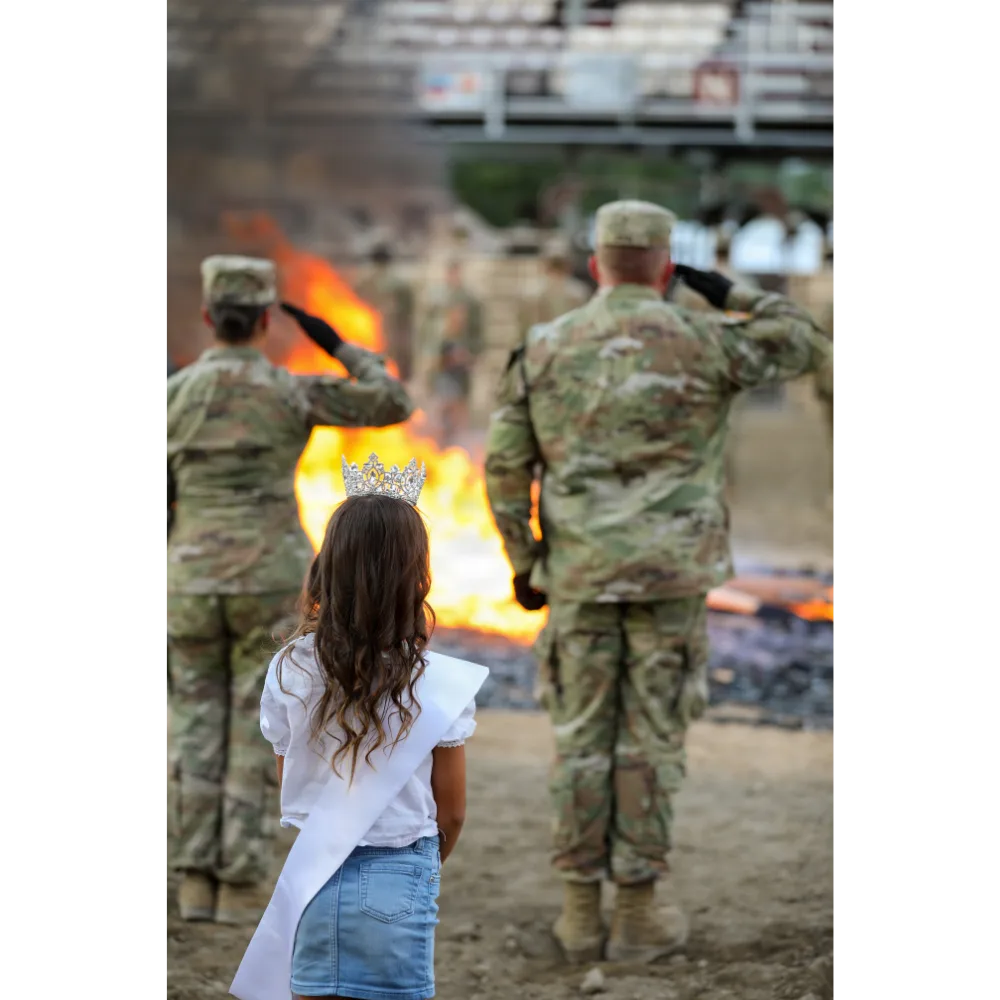
Photo: U.S. Army National Guard / Keith Garner
U.S. Army National Guard photo by Keith Garner. Utah Army National Guard soldiers, American Legion members, Boy Scouts, and community volunteers retire worn American flags at the Fiesta Days Flag Retirement Ceremony, Spanish Fork, Utah, July 2026. Source: DVIDS, Photo ID 9863415 (public domain). Use of this image does not imply endorsement by the U.S. Army, the National Guard, or the Department of Defense.
A Word on Just Throwing It Out
Quick Reference
-
 We host retirement ceremonies — contact us for drop-off or pickup.
-
Burning and burial both offered, weekends and holidays (ask about other times).
-
Replacements available on request, mainly for seniors and disabled citizens.
-
§8(k): destroy it in a dignified way, preferably by burning.
-
Synthetic flags are often better retired by burial than burning.
-
Not a federal crime to trash it, but strongly discouraged.