THE U.S. FLAG CODE
The U.S. Flag Code (Title 4, U.S. Code, Chapter 1) is the set of customs Americans have agreed on for displaying and handling the national flag — less a law with penalties, more a century-old tradition of respect. It grew out of a 1923 conference of veterans' and civic groups and was written into federal law in 1942; you can read the history below or skip to the Code further down the page.

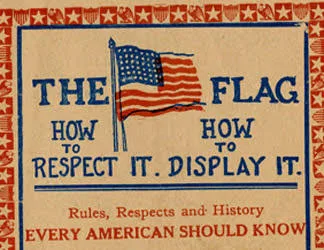
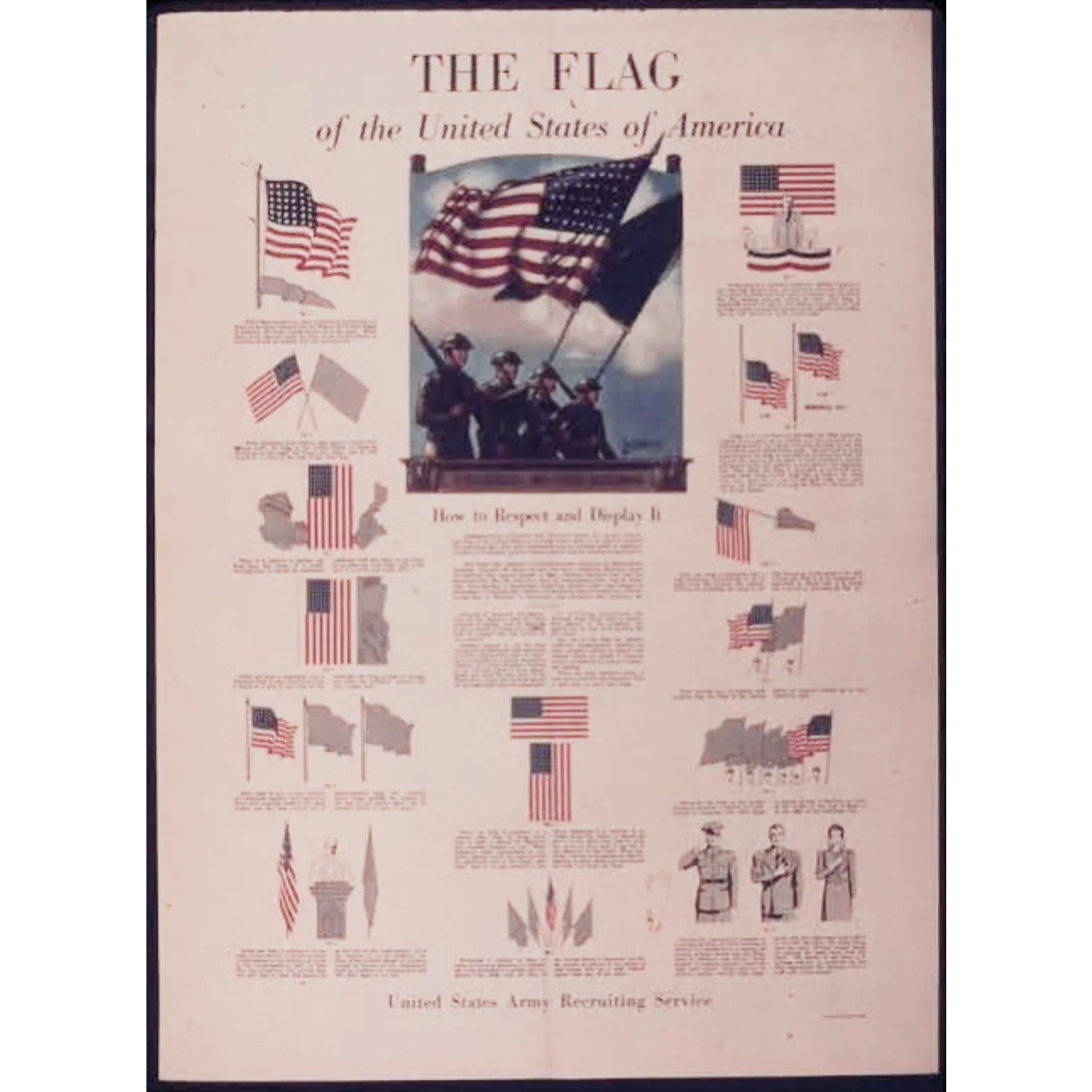
Before 1923, the United States had no single, agreed-upon set of rules for how its own flag should be treated. States had passed their own anti-desecration laws in the decades prior — the Supreme Court had even upheld a state's right to do so in a 1907 case — but there was no shared national standard for the everyday stuff: how to hang it, when to fly it, what counted as disrespect. Custom varied from town to town, and veterans' organizations in particular were increasingly uneasy watching the flag turned into advertising, party decoration, or worse. ...Read More
It's Custom, Not Law
Nothing in these pages is something you can be fined or arrested for ignoring. Congress wrote the Flag Code as a guide, not a statute with teeth — when it became federal law in 1942, lawmakers deliberately left out any penalty for private citizens. Government buildings and officials do have to follow certain parts of it, like half-staff proclamations, but for the rest of us, every rule here is a tradition we choose to keep out of respect, not an obligation the law can enforce.