
The Pledge Today
How It's Evolved
Francis Bellamy, a Baptist minister, wrote the Pledge in August 1892 for The Youth's Companion magazine. It was first recited nationally on October 12, 1892, during Columbus Day school celebrations, and originally read: “I pledge allegiance to my Flag and the Republic for which it stands, one nation, indivisible, with liberty and justice for all.”
In 1923 and 1924, the National Flag Conference — the same gatherings behind the original Flag Code — changed “my Flag” to “the Flag of the United States of America,” partly out of concern that immigrant schoolchildren might picture their homeland's flag instead. Congress formally recognized the Pledge in 1942 and adopted its official name in 1945.
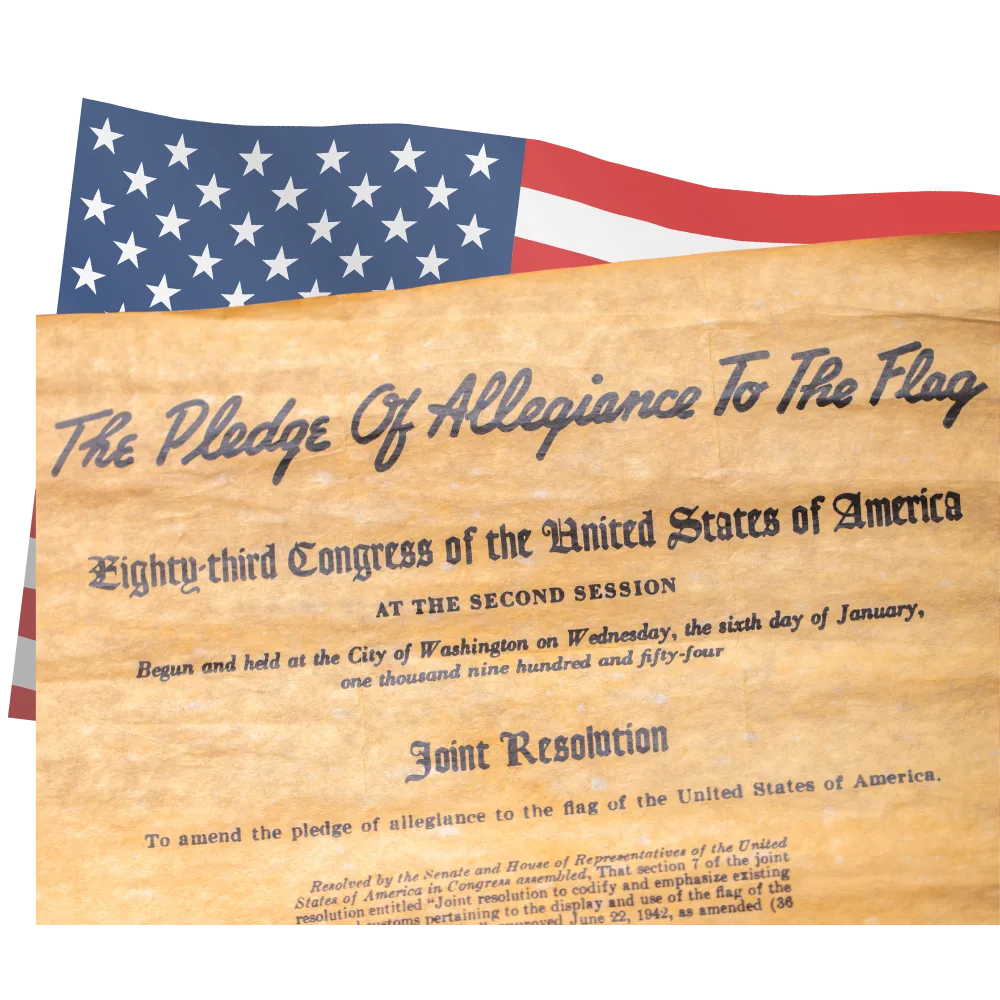
In 1954, on Flag Day, Congress added the words “under God” — pushed by the Knights of Columbus and endorsed by President Eisenhower to distinguish the United States from “godless Communism” during the Cold War. That's the version recited today.
One more change came earlier: the original hand gesture was a straight-arm salute, dropped in 1942 once it became uncomfortably similar to the Nazi salute, and replaced with today's hand over the heart.
You Can't Be Forced to Say It
Quick Reference
-
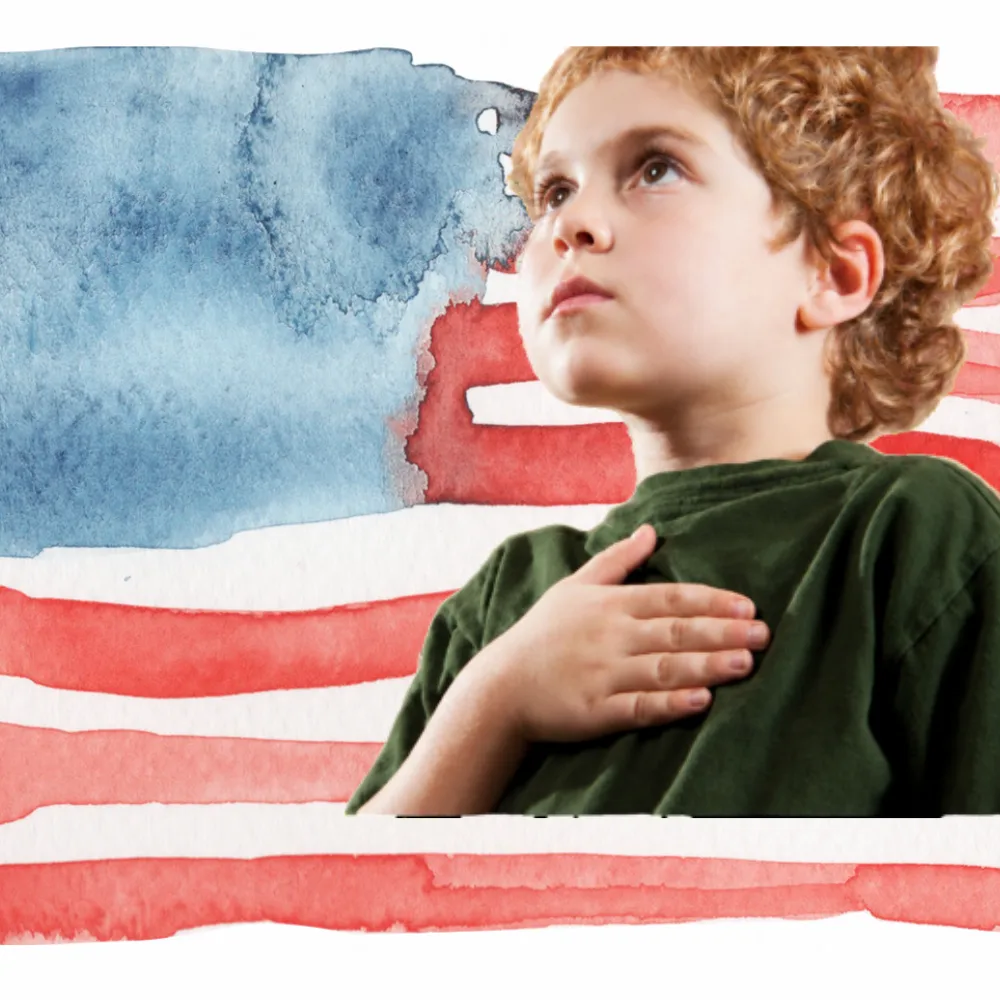
 Right hand over the heart, facing the flag.
-
Uniformed persons render the military salute instead.
-
"Under God" was added in 1954 — not part of the 1892 original.
-
Originally read "my Flag," changed to "the Flag of the United States of America" in 1923–24.
-
Public schools can't compel students to recite it (Barnette, 1943).
-
Heard today in classrooms, Congress, and naturalization ceremonies.