General Display Principles
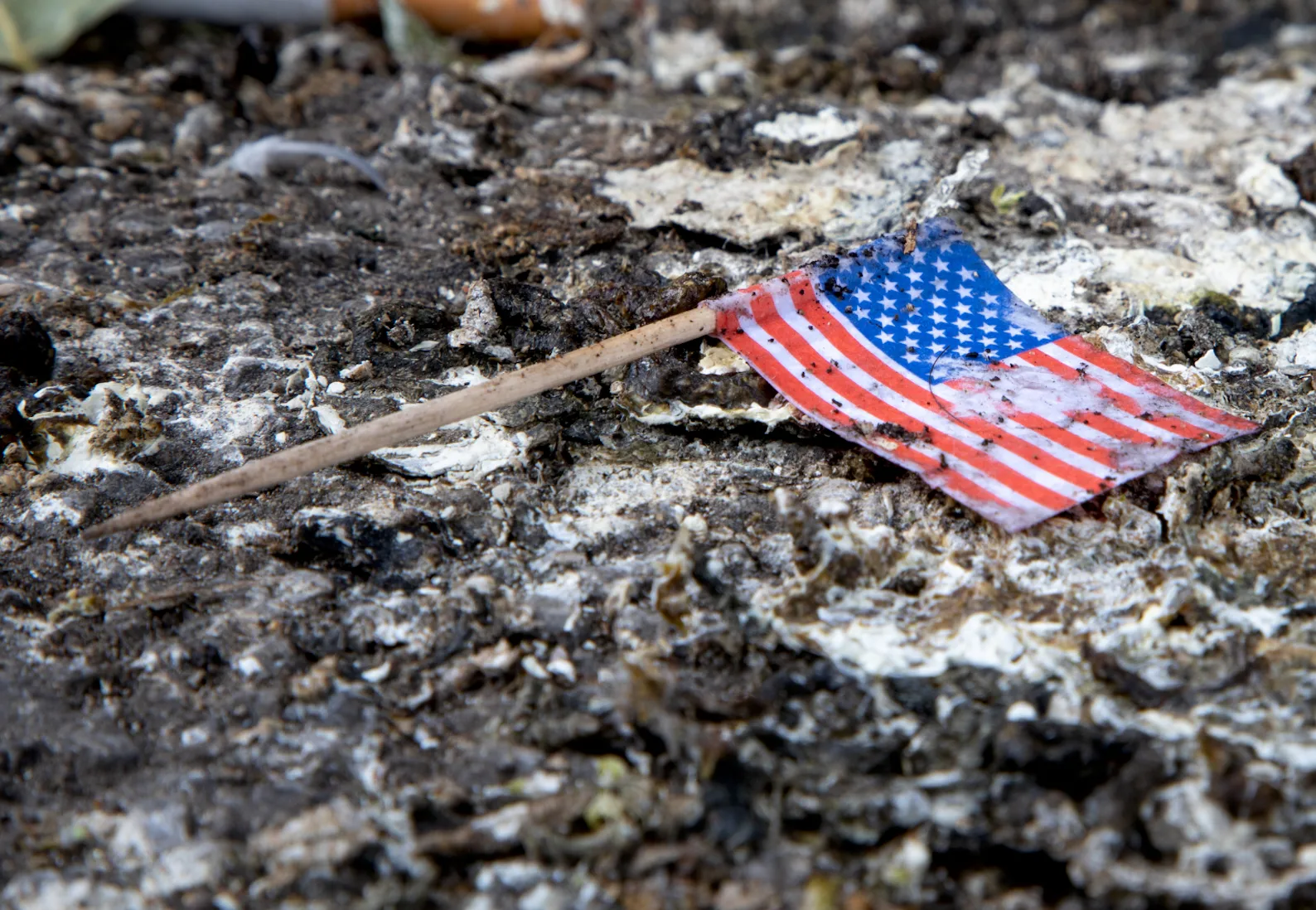
The flag should never be displayed upside down, except as a signal of dire distress. It should never touch anything beneath it — the ground, the floor, water, or merchandise — and it should never be carried flat or horizontal, but always aloft and free. When shown with other flags, nothing is flown above it or, at the same level, to its right. The flag should never be used as clothing, bedding, drapery, or a ceiling covering, and never marked with advertising or any other design.

Time of Day & Weather
Custom calls for flying the flag from sunrise to sunset on buildings and stationary flagstaffs. If a patriotic effect is wanted, it may fly 24 hours a day as long as it's properly illuminated after dark — enough that a casual observer can still recognize it as a flag. Hoist it briskly, lower it ceremoniously. It shouldn't be displayed in bad weather unless it's an all-weather flag made for the job.

Indoor Display
Flat against a wall or in a window, the union (blue field) belongs in the upper left as the viewer sees it — the flag's own right. On a staff beside a speaker, the position of honor is at the speaker's right as they face the audience, with any other flag placed to the speaker's left. When two flags are displayed crossed on staffs against a wall, the U.S. flag stays on its own right, with its staff crossing in front of the other flag's staff.

Outdoor Display
On a staff angled from a window, balcony, or building front, the union goes at the peak. Suspended over a sidewalk from a rope between a house and a pole, it should be hoisted out union-first from the building. Over the middle of a street, it hangs vertically with the union to the north on an east–west street, or to the east on a north–south street. At half-staff, it's hoisted briskly to the peak first, then lowered — and raised to the peak again before being lowered for the day.
Flag on a Vehicle
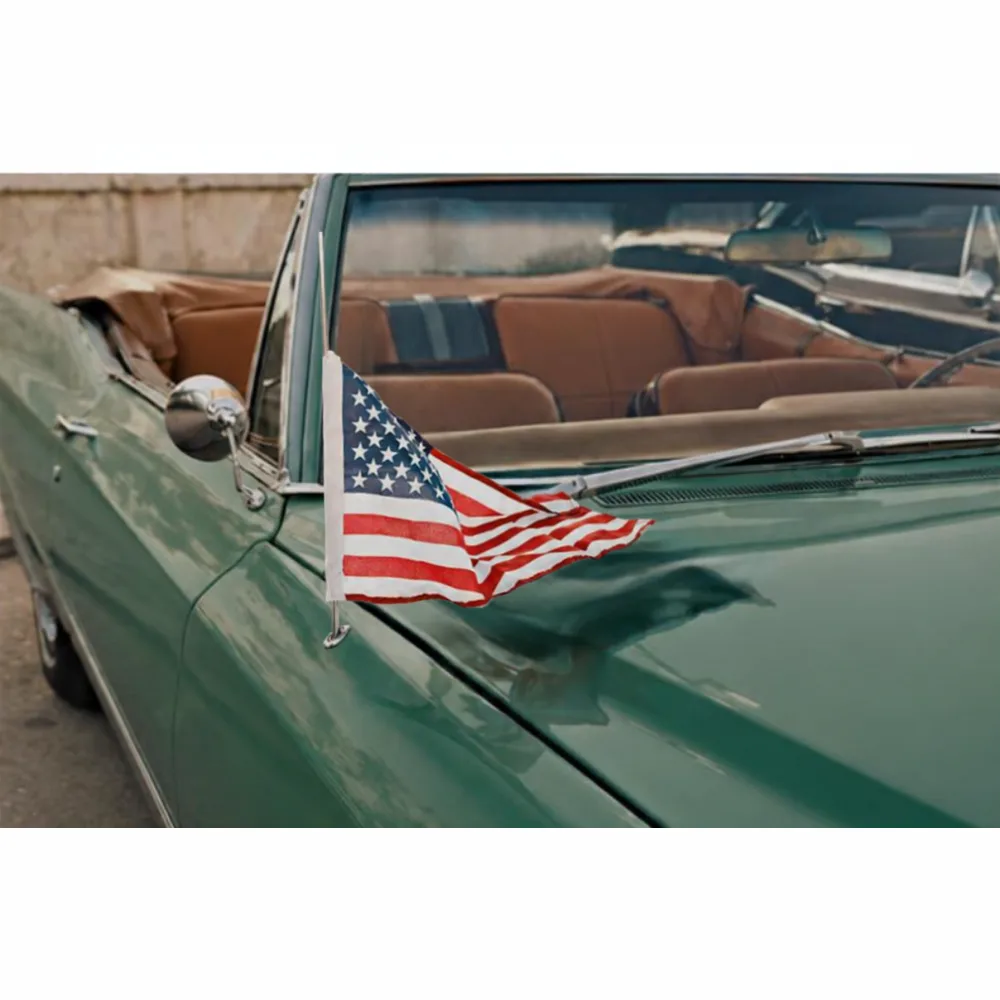
The flag should never be draped over the hood, top, sides, or back of a car, train, or boat. When it's displayed on a motorcar, the staff should be fixed firmly to the chassis or clamped to the right fender.
Flag in a Parade or Procession
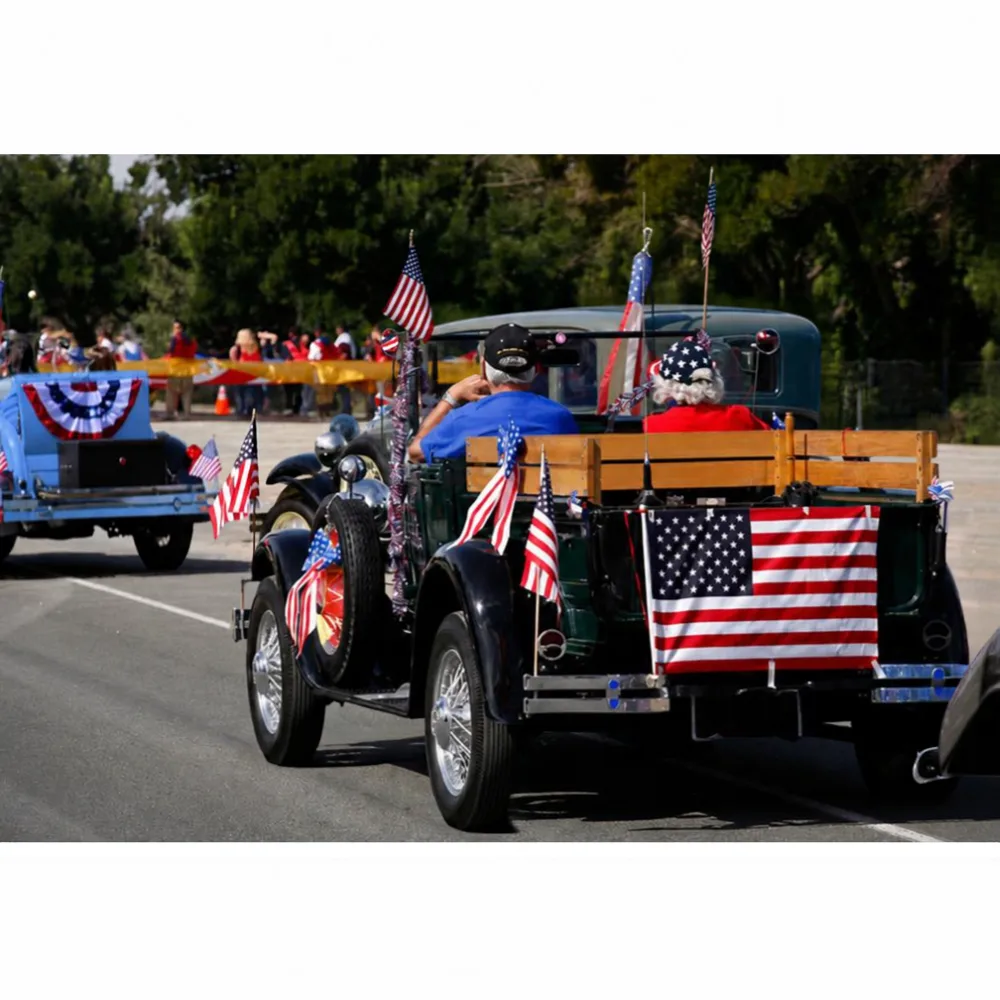
Carried with other flags, the U.S. flag takes the marching right — its own right — or, if there's a line of flags, the front and center of that line. It shouldn't be displayed on a parade float unless it's mounted on a proper staff.
Quick Reference
-
 Union up, never down — except as a distress signal.
-
Fly sunrise to sunset, or illuminate it if flying at night.
-
Bring it in during bad weather, unless it's all-weather.
-
Indoors, the union belongs upper-left from the viewer's side.
-
On a car, staff clamped to the right fender — never draped.
-
In a parade, it takes the marching right or front-center.