The History Of Our United States Flag
We have had 31 flags since 1777 (-27 official-). Most changes were simply adding stars as new states joined the Union — the stripe count was fixed at 13 in 1818. The current 50-star flag has been in use since July 4, 1960 (after Hawaii joined in 1959), making it the longest-serving version in U.S. history.
Curious how the flag has changed over time? See every version, from 1775 to today.
All Our U.S. Flags ➞NOTABLE FLAGS
THE MOST NOTABLE FLAGS
Continental Union Flag (1775–1777)
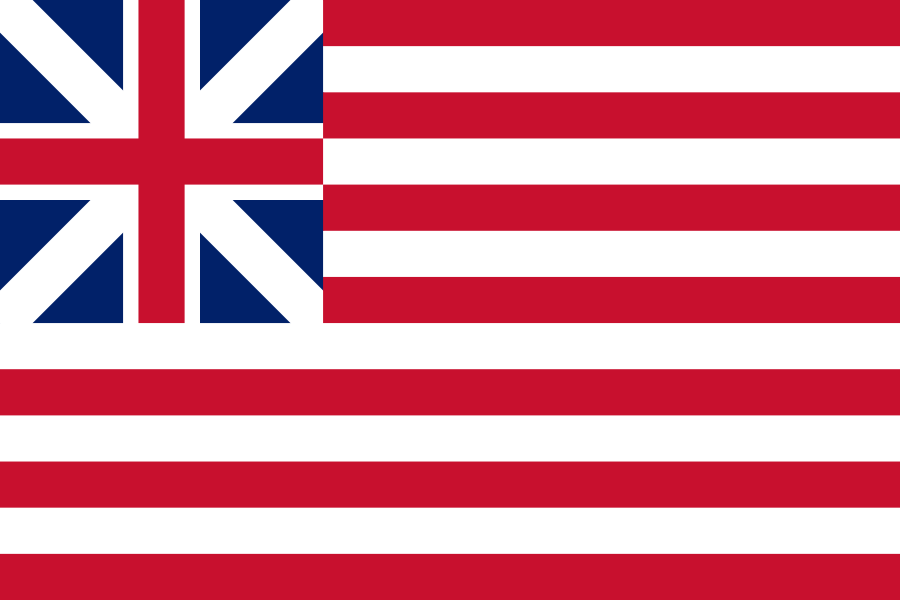
Before America had its own flag, it had this hybrid. The Continental Union Flag combined the British Union Jack in the canton with 13 red and white stripes representing the rebelling colonies — a strange middle ground for a nation still deciding whether it wanted independence or reconciliation. George Washington raised it over his camp near Boston in January 1776, and British troops reportedly mistook it as a signal of surrender, since it still bore their own flag's imagery. It's the flag of a country not yet fully born: proud of its identity, but not yet ready to cut the final cord.
Before America had its own flag, it had this hybrid. The Continental Union Flag combined the British Union Jack in the canton with 13 red and white stripes representing the rebelling colonies — a strange middle ground for a nation still deciding whether it wanted independence or reconciliation. George Washington raised it over his camp near Boston in January 1776, and British troops reportedly mistook it as a signal of surrender, since it still bore their own flag's imagery. It's the flag of a country not yet fully born: proud of its identity, but not yet ready to cut the final cord.
13 Stars, 13 Stripes (1777–1795)
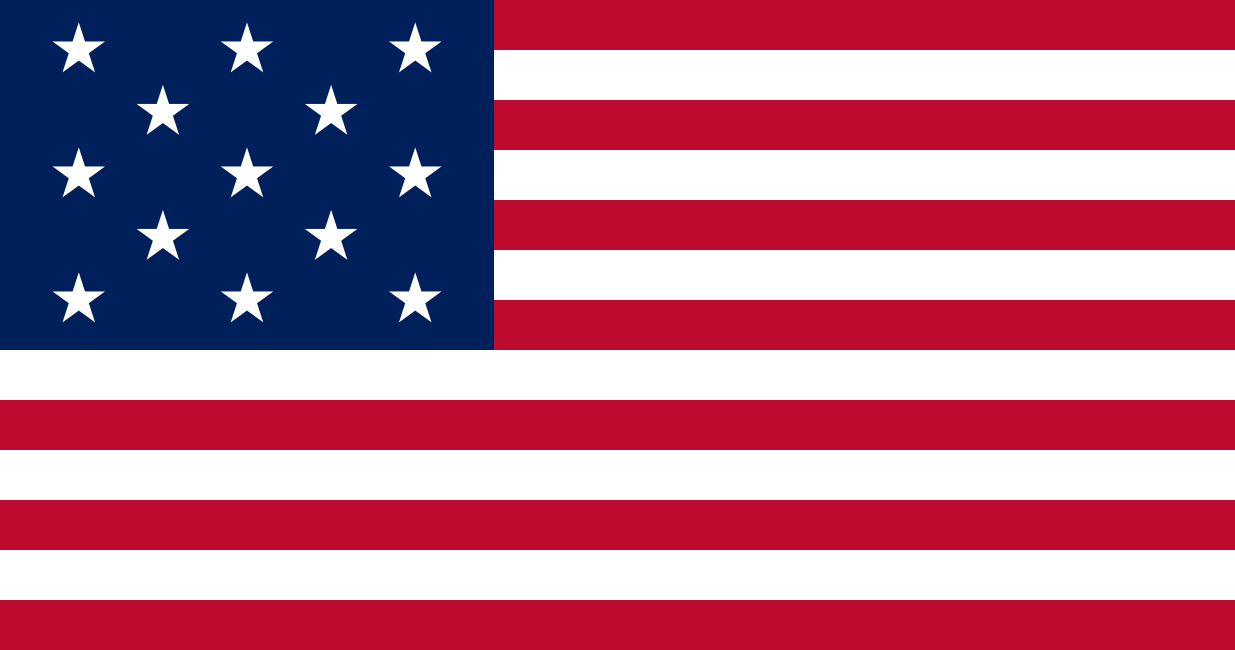
Adopted by the Second Continental Congress on June 14, 1777 — a date now celebrated as Flag Day — this was the first truly American flag, with 13 white stars on blue representing "a new constellation." No official layout was specified, so early makers arranged the stars in circles, rows, or scattered patterns depending on personal taste. It flew through the final years of the Revolutionary War and the ratification of the Constitution, witnessing the birth of an entirely new form of government. For 18 years, it was the only flag the United States had ever known.
Adopted by the Second Continental Congress on June 14, 1777 — a date now celebrated as Flag Day — this was the first truly American flag, with 13 white stars on blue representing "a new constellation." No official layout was specified, so early makers arranged the stars in circles, rows, or scattered patterns depending on personal taste. It flew through the final years of the Revolutionary War and the ratification of the Constitution, witnessing the birth of an entirely new form of government. For 18 years, it was the only flag the United States had ever known.
Betsy Ross Flag (Circular 13-star version)
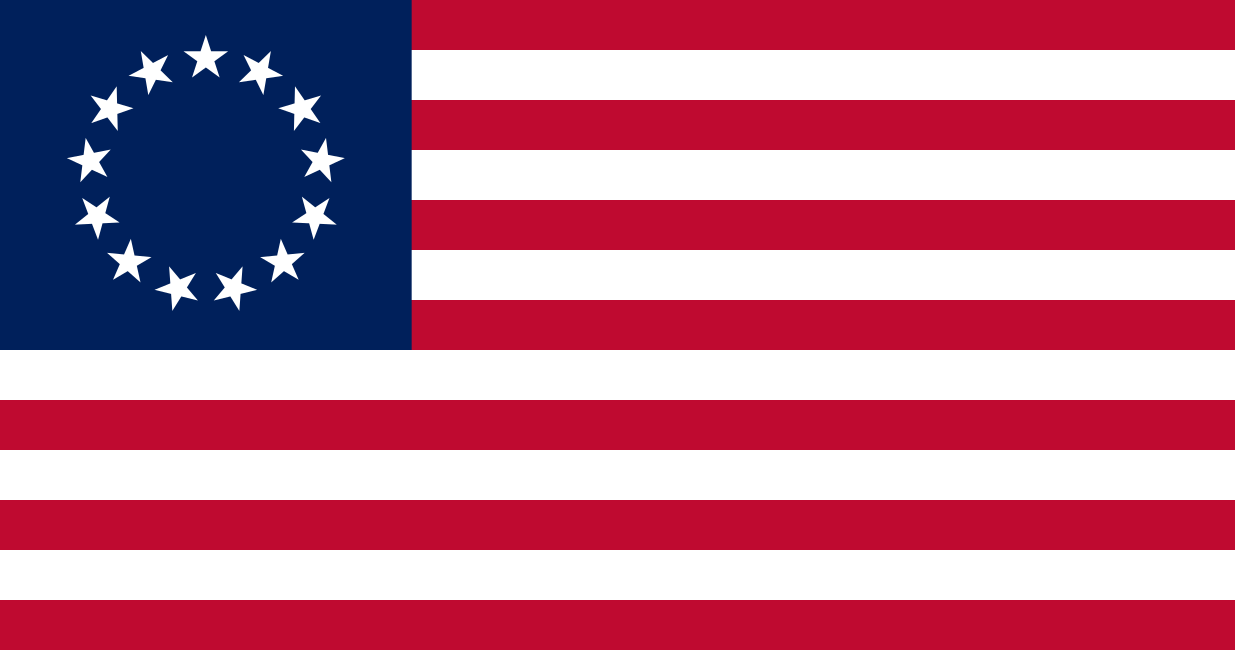
Popular legend credits Philadelphia seamstress Betsy Ross with sewing the first American flag at George Washington's request in 1776, arranging its 13 stars in a distinctive circle. Historians can't verify the story — it surfaced nearly a century later, told by her grandson in 1870 — but the design endures as the most iconic and recognizable of the early flags. Whether or not Ross actually created it, the circular star pattern became a cultural shorthand for the Revolution itself, appearing in classrooms, parades, and patriotic imagery for generations, proof that a good story can outlast its own uncertain origins.
Popular legend credits Philadelphia seamstress Betsy Ross with sewing the first American flag at George Washington's request in 1776, arranging its 13 stars in a distinctive circle. Historians can't verify the story — it surfaced nearly a century later, told by her grandson in 1870 — but the design endures as the most iconic and recognizable of the early flags. Whether or not Ross actually created it, the circular star pattern became a cultural shorthand for the Revolution itself, appearing in classrooms, parades, and patriotic imagery for generations, proof that a good story can outlast its own uncertain origins.
Star-Spangled Banner (1795–1818, 15 stars, 15 stripes)
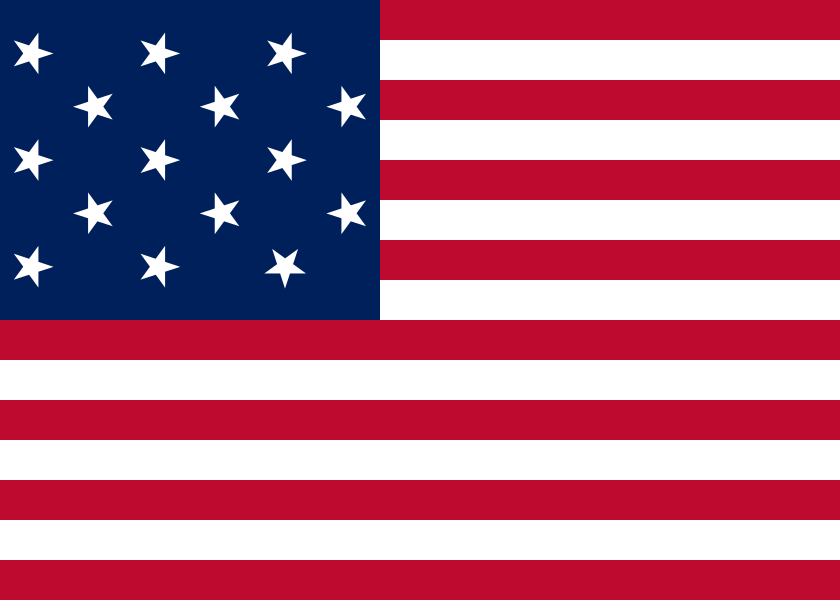
This is the only U.S. flag to ever add stripes as well as stars, expanded to 15 and 15 when Vermont and Kentucky joined the Union. It's also the flag immortalized in American history: a massive version flying over Fort McHenry survived a 25-hour British bombardment during the War of 1812, inspiring Francis Scott Key to write the poem that became the national anthem. Congress eventually realized stripes couldn't keep multiplying forever, fixing the count back at 13 in 1818 to honor the original colonies — meaning this flag remains the only 15-stripe version in American history.
This is the only U.S. flag to ever add stripes as well as stars, expanded to 15 and 15 when Vermont and Kentucky joined the Union. It's also the flag immortalized in American history: a massive version flying over Fort McHenry survived a 25-hour British bombardment during the War of 1812, inspiring Francis Scott Key to write the poem that became the national anthem. Congress eventually realized stripes couldn't keep multiplying forever, fixing the count back at 13 in 1818 to honor the original colonies — meaning this flag remains the only 15-stripe version in American history.
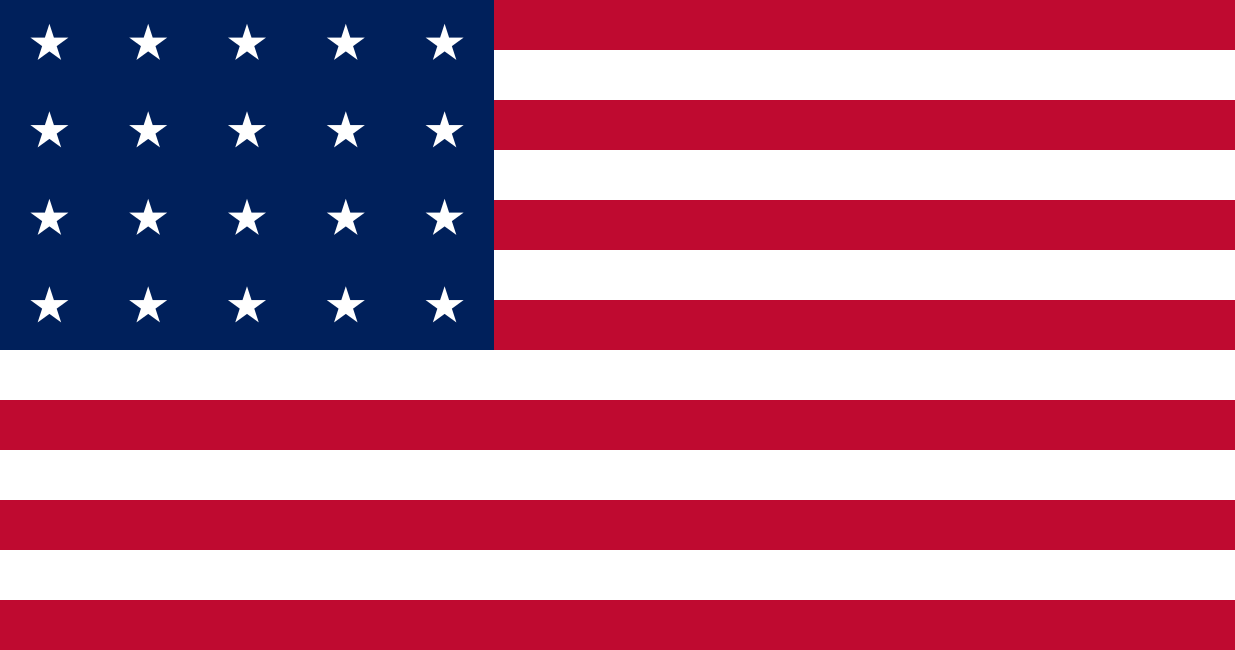
20 Stars (1818–1819)
This is the only U.S. flag to ever add stripes as well as stars, expanded to 15 and 15 when Vermont and Kentucky joined the Union. It's also the flag immortalized in American history: a massive version flying over Fort McHenry survived a 25-hour British bombardment during the War of 1812, inspiring Francis Scott Key to write the poem that became the national anthem. Congress eventually realized stripes couldn't keep multiplying forever, fixing the count back at 13 in 1818 to honor the original colonies — meaning this flag remains the only 15-stripe version in American history.
This is the only U.S. flag to ever add stripes as well as stars, expanded to 15 and 15 when Vermont and Kentucky joined the Union. It's also the flag immortalized in American history: a massive version flying over Fort McHenry survived a 25-hour British bombardment during the War of 1812, inspiring Francis Scott Key to write the poem that became the national anthem. Congress eventually realized stripes couldn't keep multiplying forever, fixing the count back at 13 in 1818 to honor the original colonies — meaning this flag remains the only 15-stripe version in American history.
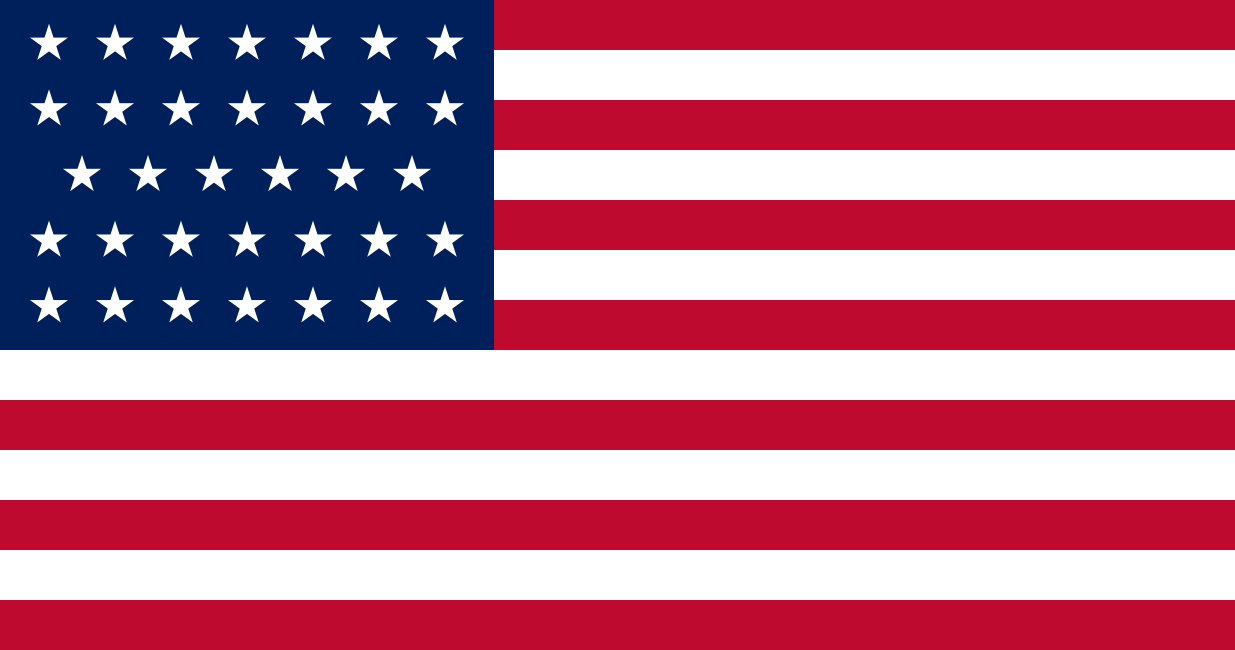
34 Stars (1861–1863)
Flying at the outbreak of the Civil War, this flag carried a star for Kansas even as eleven states attempted to secede — a quiet but pointed statement that the Union considered the Confederacy's departure illegitimate. Abraham Lincoln refused to remove stars for departed states, insisting the flag represent the country as a whole, unbroken. It became a powerful rallying symbol in the North throughout the war's early, uncertain years, appearing on soldiers' uniforms, homes, and battlefields alike. Few flags in American history carried more emotional and political weight than this one did during the nation's most divided moment.
Flying at the outbreak of the Civil War, this flag carried a star for Kansas even as eleven states attempted to secede — a quiet but pointed statement that the Union considered the Confederacy's departure illegitimate. Abraham Lincoln refused to remove stars for departed states, insisting the flag represent the country as a whole, unbroken. It became a powerful rallying symbol in the North throughout the war's early, uncertain years, appearing on soldiers' uniforms, homes, and battlefields alike. Few flags in American history carried more emotional and political weight than this one did during the nation's most divided moment.
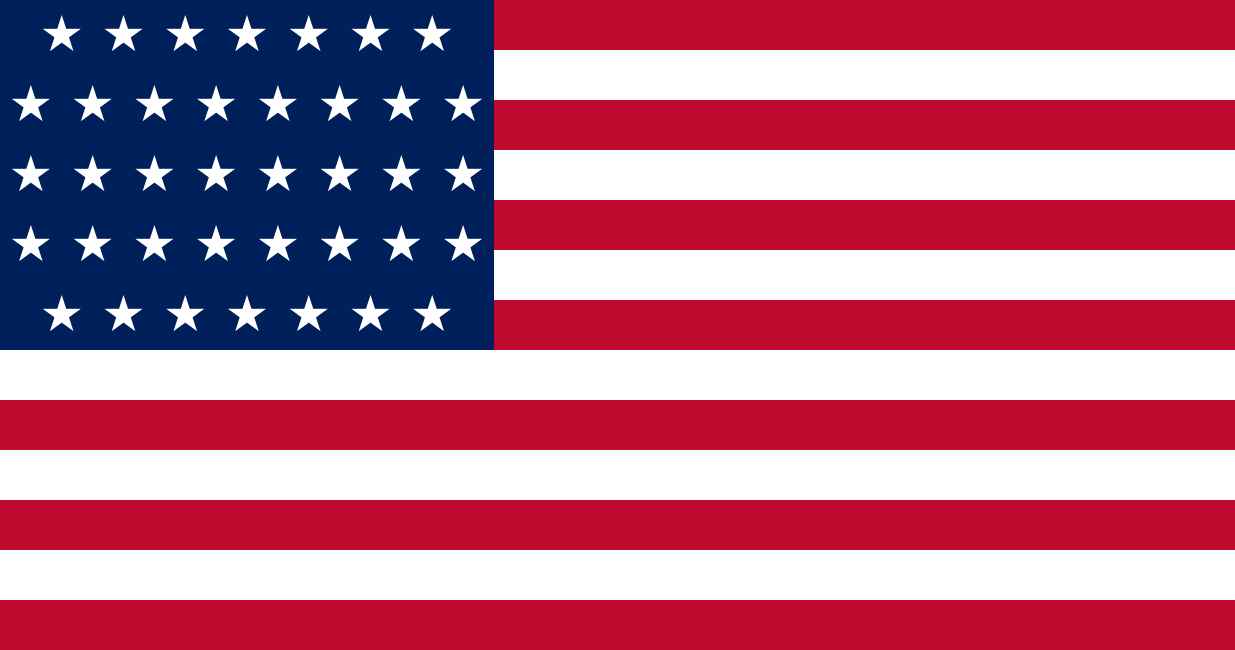
38 Stars (1877–1890)
Marking Colorado's 1876 admission — fittingly nicknamed "the Centennial State" for joining during the nation's 100th birthday — this flag flew through the tail end of Reconstruction and deep into the Gilded Age. It's a flag of rapid westward growth, presiding over the completion of transcontinental railroads, the closing of the frontier, and waves of immigration reshaping American cities. At 13 years, it held the record at the time for longest-serving version since the star-per-state system began, a brief plateau in an era when new states — and new stars — kept arriving at a dizzying pace.
Marking Colorado's 1876 admission — fittingly nicknamed "the Centennial State" for joining during the nation's 100th birthday — this flag flew through the tail end of Reconstruction and deep into the Gilded Age. It's a flag of rapid westward growth, presiding over the completion of transcontinental railroads, the closing of the frontier, and waves of immigration reshaping American cities. At 13 years, it held the record at the time for longest-serving version since the star-per-state system began, a brief plateau in an era when new states — and new stars — kept arriving at a dizzying pace.
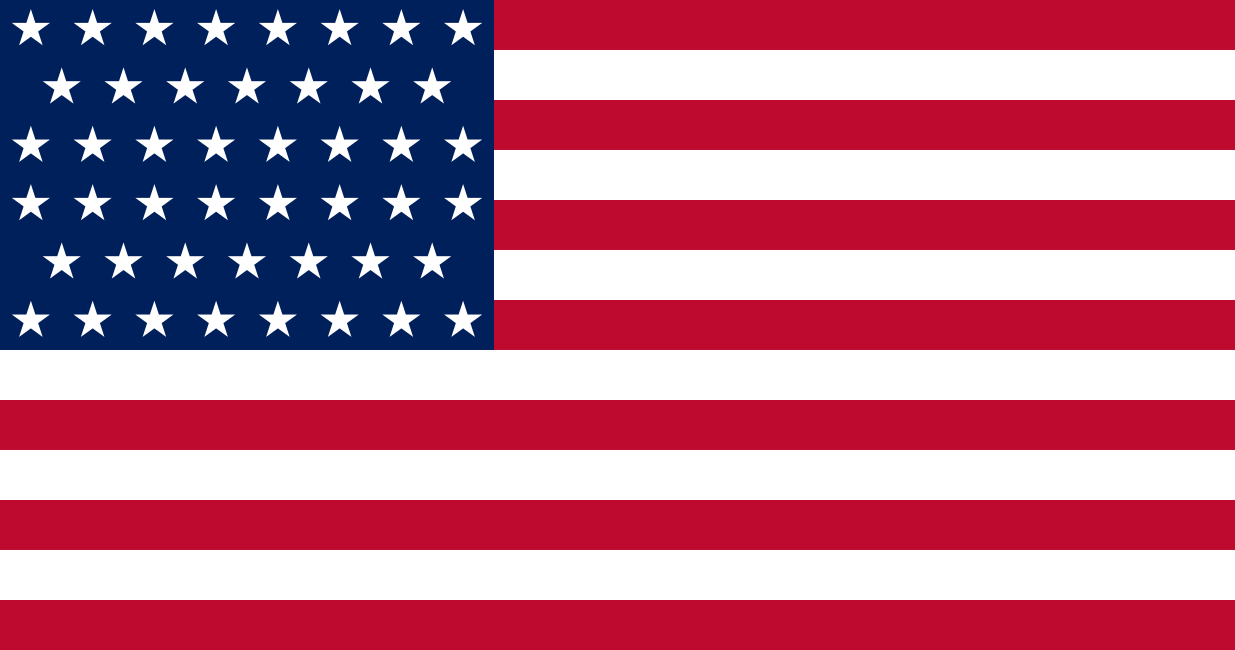
46 Stars (1908–1912)
This flag flew during a pivotal stretch of the Progressive Era, as Theodore Roosevelt and William Howard Taft pushed reforms around trusts, labor, and conservation. Oklahoma's 1907 admission brought the star count to 46, and the flag remained unchanged just long enough to witness the sinking of the Titanic in April 1912 — a tragedy that unfolded in the flag's final weeks before New Mexico and Arizona's admissions triggered the next update. It's a flag caught at the hinge point between America's 19th-century expansion and its emergence as a 20th-century industrial and political power.
This flag flew during a pivotal stretch of the Progressive Era, as Theodore Roosevelt and William Howard Taft pushed reforms around trusts, labor, and conservation. Oklahoma's 1907 admission brought the star count to 46, and the flag remained unchanged just long enough to witness the sinking of the Titanic in April 1912 — a tragedy that unfolded in the flag's final weeks before New Mexico and Arizona's admissions triggered the next update. It's a flag caught at the hinge point between America's 19th-century expansion and its emergence as a 20th-century industrial and political power.
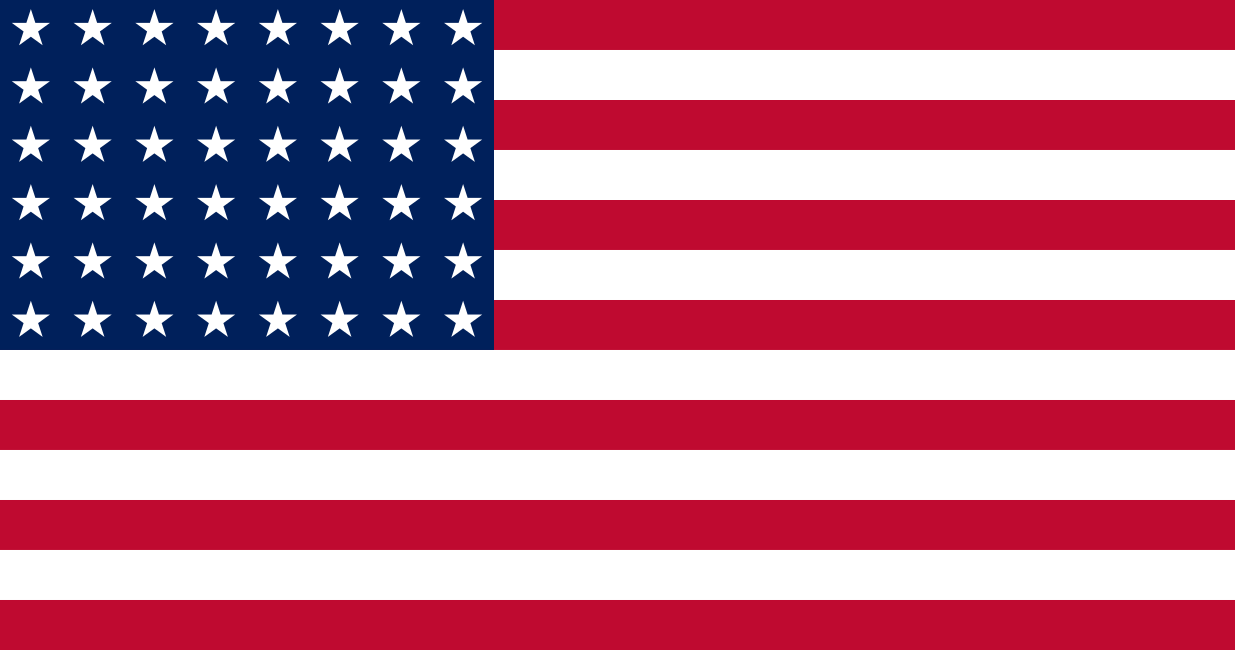
48 Stars (1912–1959)
No flag in American history has lasted longer relative to the sheer scale of what it witnessed: both World Wars, the Great Depression, the rise of the automobile and radio, the Cold War's opening decade, and the early Space Race. For 47 years — until Alaska's admission in 1959 — this was simply "the American flag" for most citizens living through it, raised over Iwo Jima, painted on WWII bombers, and planted in the ash of Normandy beaches. Its remarkable staying power reflects just how long the nation went without adding a new state, a pause unmatched before or since.
No flag in American history has lasted longer relative to the sheer scale of what it witnessed: both World Wars, the Great Depression, the rise of the automobile and radio, the Cold War's opening decade, and the early Space Race. For 47 years — until Alaska's admission in 1959 — this was simply "the American flag" for most citizens living through it, raised over Iwo Jima, painted on WWII bombers, and planted in the ash of Normandy beaches. Its remarkable staying power reflects just how long the nation went without adding a new state, a pause unmatched before or since.
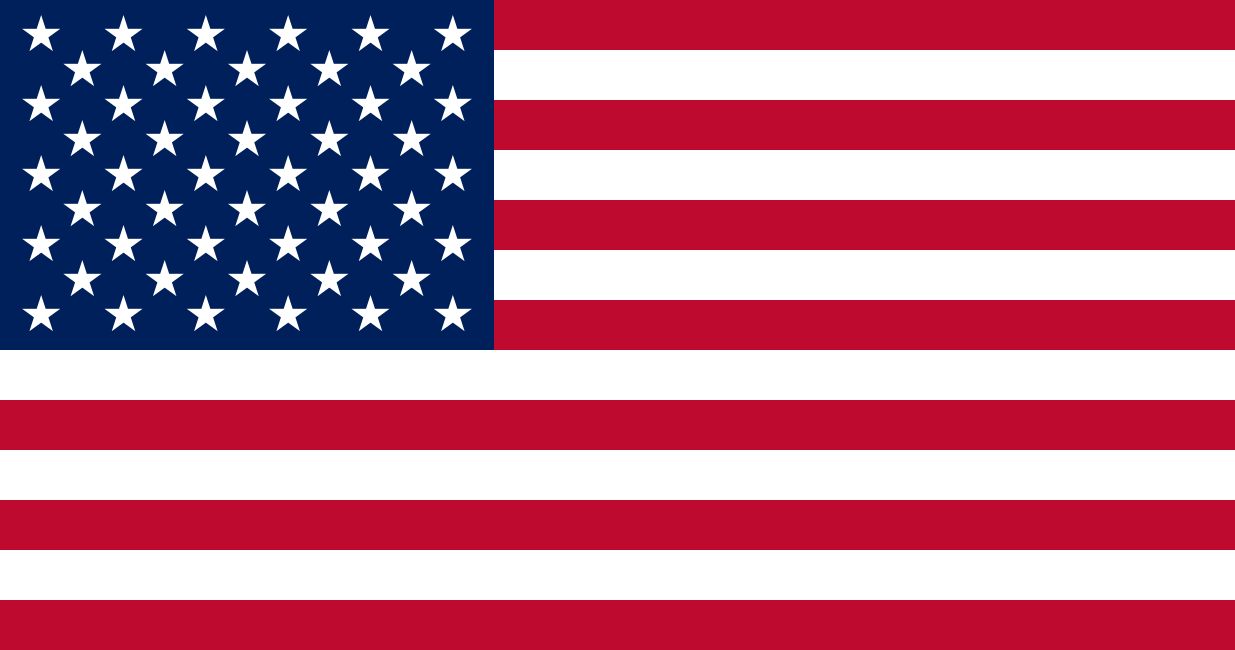
50 Stars (1960–Present)
Designed by 17-year-old Robert G. Heft as a high school history class project — he initially received a B-minus, later raised to an A after President Eisenhower selected his design from over 1,500 submissions — this flag has now flown longer than any version in U.S. history. Officially adopted July 4, 1960, following Hawaii's statehood, it has presided over the Moon landing, the fall of the Berlin Wall, and six decades of continuous American history. Sixty-plus years in, it remains the flag every American living today has only ever known.
Designed by 17-year-old Robert G. Heft as a high school history class project — he initially received a B-minus, later raised to an A after President Eisenhower selected his design from over 1,500 submissions — this flag has now flown longer than any version in U.S. history. Officially adopted July 4, 1960, following Hawaii's statehood, it has presided over the Moon landing, the fall of the Berlin Wall, and six decades of continuous American history. Sixty-plus years in, it remains the flag every American living today has only ever known.